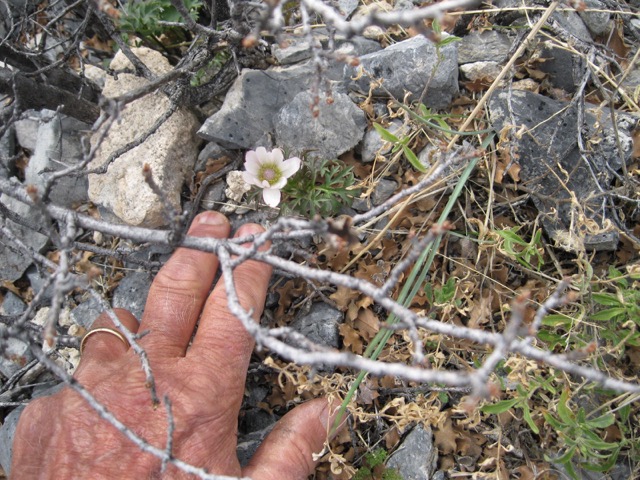
Desert anemone (Anemone tuberosa) is in the Buttercup Family. Buttercups are the genus Ranuculus and the family name is Ranunculaceae. It’s probably just me, but that is a marvelous family name to write and pronounce. Kearney and Peebles’ Arizona Flora lists three species of Anemone (also a nice name to say no matter how you pronounce it), but I suspect one species got renamed or lumped with another and there are now only two species for Arizona. That’s the kind of stuff that keeps you on your toes, that is, if botany is of any interest. Anyway, desert anemone is one of the first wildflowers to bloom and to see it you’ll need to head to a rocky slope above the desert floor sometime in February and that’s where you’ll find it hiding among the rocks. On our hike in the hills above Fort Bowie National Monument we also saw pointleaf manzanita blooming as it also is an early bloomer. Whoa, now you have two good reason to head for the hills!
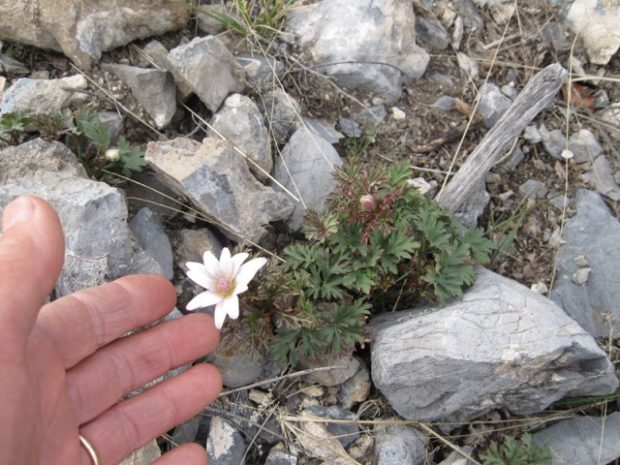
The photos are mine and show desert anemone in the limestone on the hill above Ft. Bowie. Those are not petals on the flowers, but the sepals. The flower has petaloid sepals. Something you can say to your hiking companion to impress them. I did, but I’m not sure it impressed. Oh, and by the way, those hills above Fort Bowie are an excellent place to see the shrubby form of sandpaper oak (Quercus pungens) growing out of the rocks. Now you know.

Both jackass clover (Wislizenia refracta) and clammy weed (Polanisia dodecandra) are in the Cleome family Cleomaceae, having left the caper family Capparaceae due to...
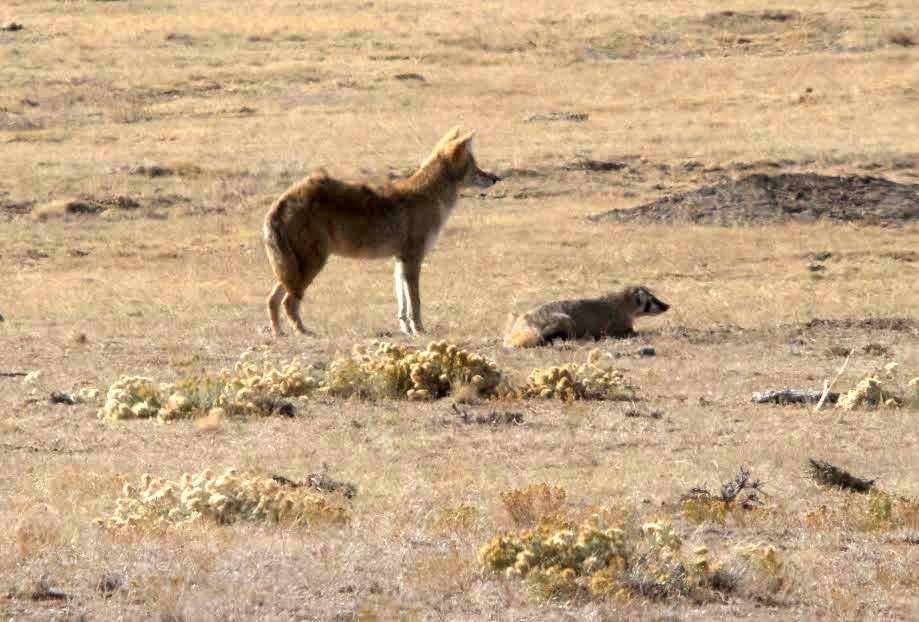
I hope that this show sorta speaks for itself, but I will tell you I wrote this story and song in July of 2002...
This episode is about a fall blooming plant called Ageratina herbacea. Ageratina means a small or smaller Ageratum… another beautiful blooming plant….herbacea means herbaceous....