I spent so much time jabbering about my conversion to a desert rat and monsoon believer that I left out some fun stuff.
Native bees that buzz pollinate flowers are Bombus species., Centris spp., and Anthophora spp. And yes, you really can hang out by the flowers and see and hear this happening! Oh, and look at how the petals of a senna flower create a cup; sonicated exploding pollen ricochets off the petals…there is no way a bee is leaving without pollen attached to it.

The featured senna is Senna wislizeni and the specific epithet is in honor of Friedrich Wislizen, a German born American physician, botanist, plant collector…yet another pesky immigrant! His name shows up in a few other species as well and what little I read about him it sounds like he was a wonderful and deserving fellow. So the senna can be called Wislizinus’ senna…quite a mouthful…or simply, woody senna, because it is.
Sennas are in the Fabaceae and there are eight native species found in Arizona. Woody senna is found in Cochise County and into Sonora from 4,000’ to 5,000’ on slopes and mesas.
The cloudless sulphur butterfly is Phoebis sennae. Phoebe is the goddess of the moon and sennae refers to the host plants. Cloudless sulphurs are common and beautiful. Checkout the caterpillar in the photo below.

The photos of the flowers and caterpillar are mine and taken of some plants that I planted years ago along our drive. Every July and August they bloom and remind me of my monsoon belief system.
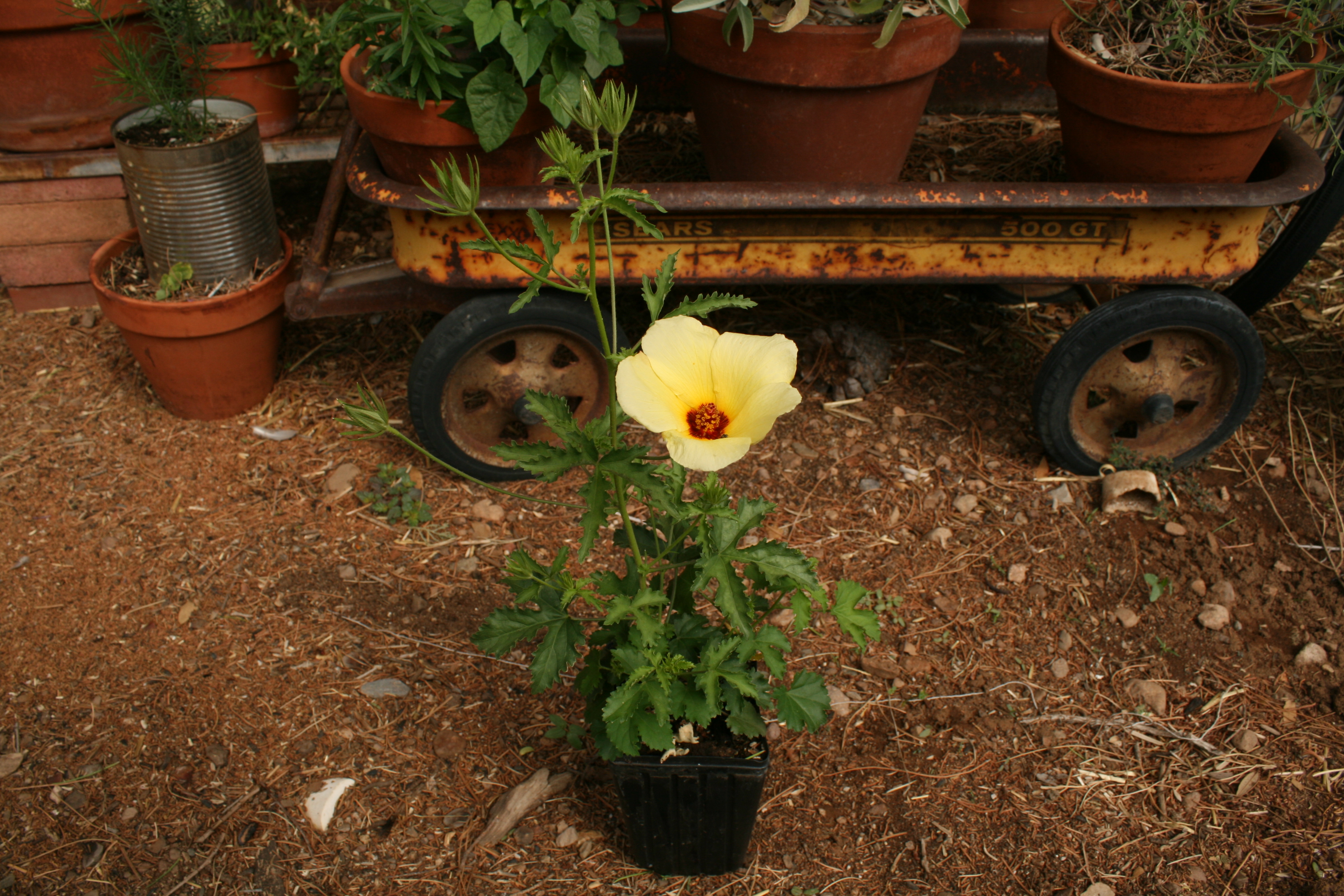
Desert Rosemallow is the official common name I think, though I see it called Coulter’s Hibiscus as well. The latter name makes a lot...
I forgot to say that false solomon’s seal was formerly in the family Liliaceae, but is now in Asparagaceae. There are 2 subspecies of...
When I used to give talks I would always show photos and talk about our regional yucca species; Yucca elata, Y. baccata and Yucca...