White-tailed deer in southwest North America are Odocoileus virginiana couesi or Coues white-tailed deer. The naturalist Elliot Coues is probably rolling in his grave from our pronunciation of his name, which is pronounced “cows” not “cooz.” Our apologies to him and his descendants; everyone says “cooz.”
Golden eagles are found around the world in the Northern Hemisphere and I read that there are six subspecies. Our North American golden eagle is Aquila chrysaetos canadensis. I love the sound of the genus species Aquila chrysaetos. To me it sounds like it should be said by a priest while sprinkling holy water with a leafy branch of rue. I know, that’s just me.
The mimosa I found on the rocky slopes of the Chiricahuas is Mimosa grahamii. I was excited to see it because it’s not all that common. There are only four species of Mimosa in the borderlands and I’ve got three of them in the Chiricahuas. “Woo hoo!” shouts the plant geek. There is no photo of the mimosa as it was quite brown and dropping leaves…next spring that will be a quest.
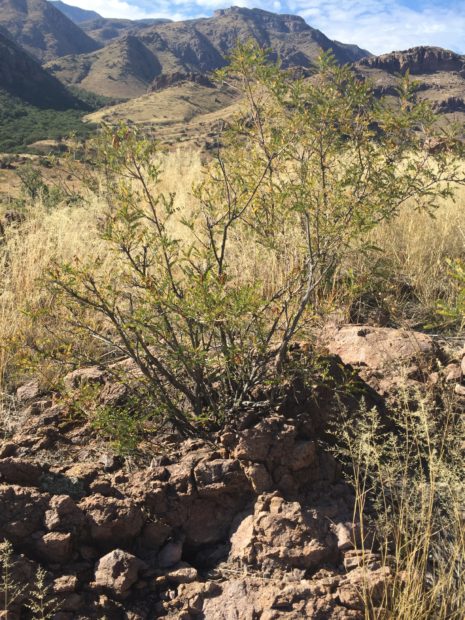
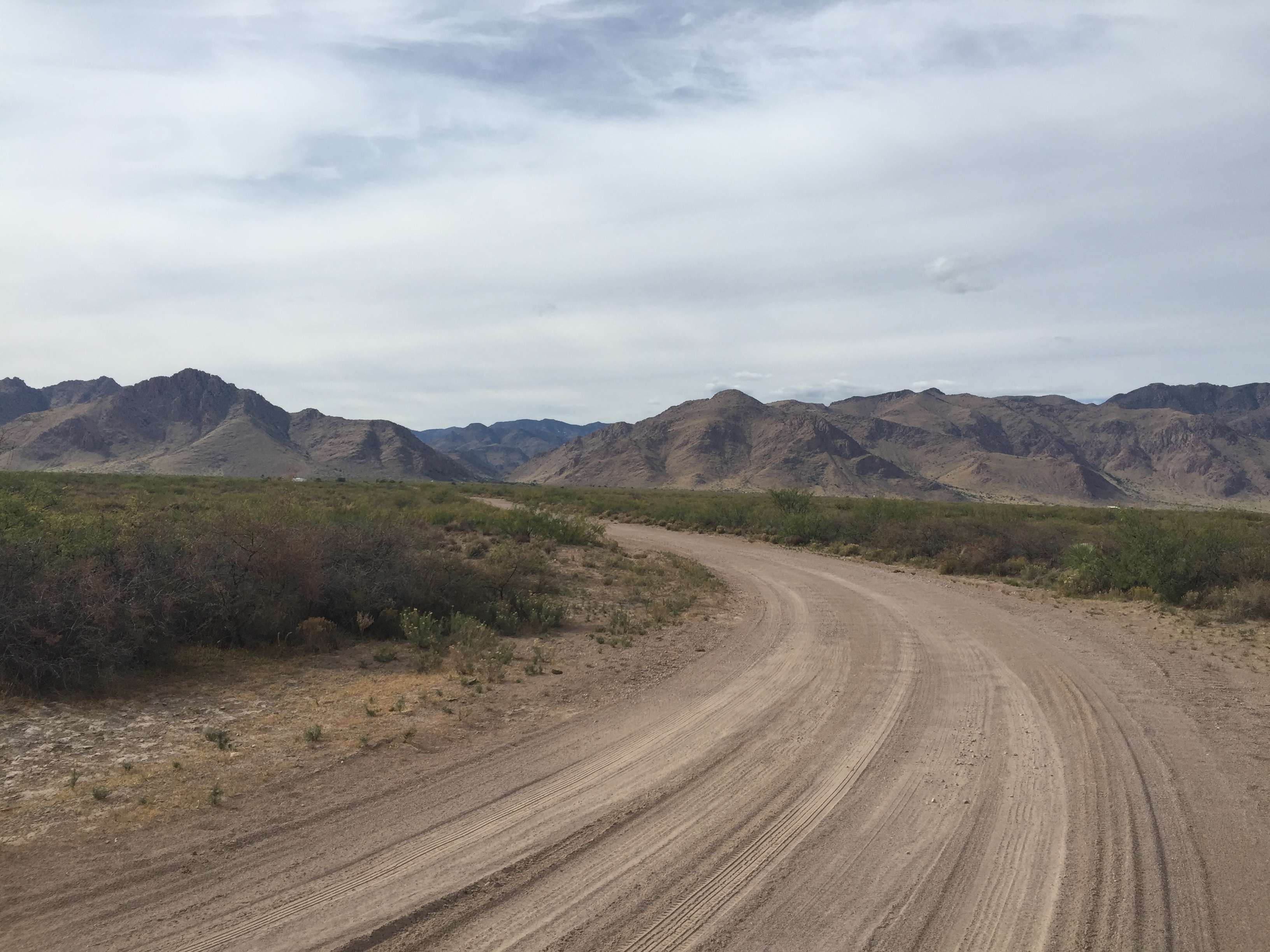
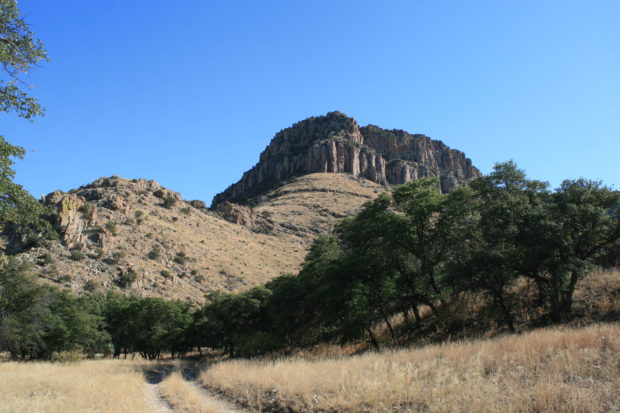
The photos are mine. I like the road leading into the hills. It was only smooth going for about a mile, then not so smooth. The shrub on the rocky slope in the photo above is kidneywood (Eysenhardtia orthocarpa). I’ve included it because it captures the hills and mountains behind it. The photo below is of the rocky slopes and tall spires that were above our camp in an oak woodland.
Well, there is nothing more fun, well okay, for me, than starting in the desert grassland and slowly driving and stopping your way up...
I know that being in the moment or being here now is important, but I confess to spending a lot of time wanting to...
If you are inclined to be a botanical splitter, then the plant I’m talking about is Condalia warnockii var. kearneyana, or so say Benson...