Well, first things first, Abutilon sonorae is now Abutilon mollicomun. I should have checked my favorite web site SEINet so as to be current in the taxonomy. Mollicomun translates to “with soft hairs”. The dichotomous key for Abutilon sonorae in Arizona Flora says, “stems and petioles sparsely to copiously hirsute…”. I miss being copiously hirsute.
Native plants aren’t always showy, but in habitat they are part of an ecological fabric that is a marvelous jumbled mess. So you’re probably not going to add a Sonoran Indian mallow to your personal landscape for its flowers, but to help create a marvelous jumbled mess in your yard. A native mess.The large cordate leaves around the base of the tall stem are certainly a nice part of that mess. Oh, there is a showy native Abutilon found in the nursery trade if you’re not into hirsute stems and petioles. Look for Abutilon palmeri at your favorite native plant nursery. Me, I’ll be growing the tall stemmed and small flowered Sonoran Indian mallow and taking them to market in the spring… Grow Native!
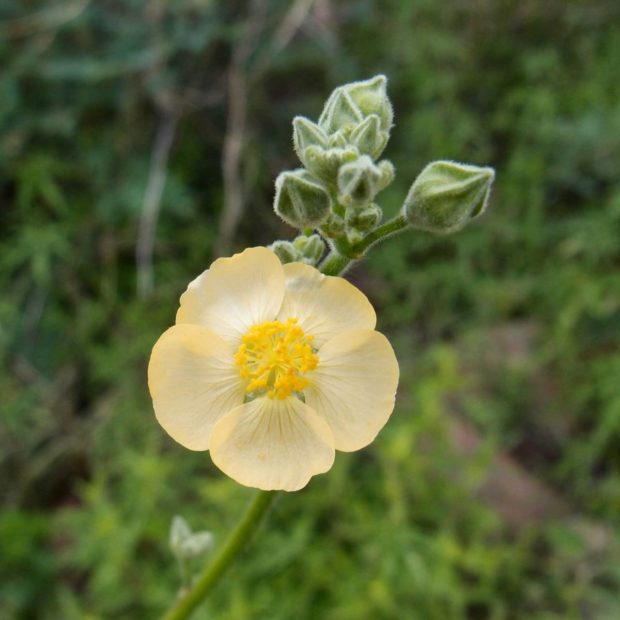
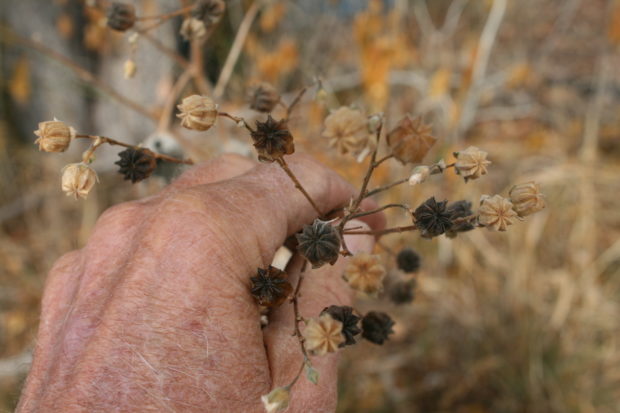
The photo of the flower is by Sue Carnahan and the photo of the seed capsules is mine.
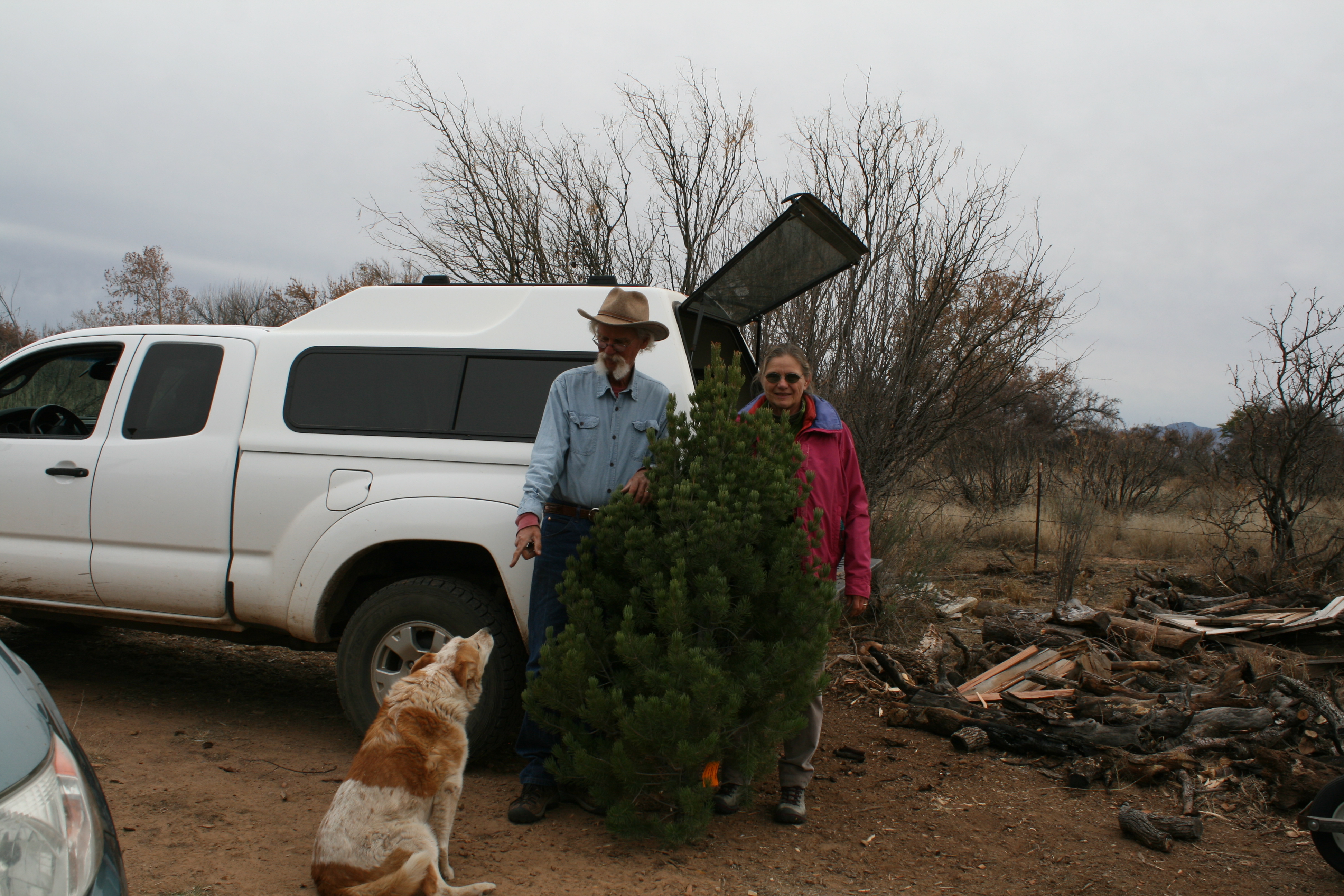
We love our annual Christmas tree hunt and it’s been going on for a long time. I have 35 mm slides of hunts from...
Eumorpha typhon or the typhon sphinx moth is out and about gathering nectar and sharing pollen from June to August in the borderlands. I...
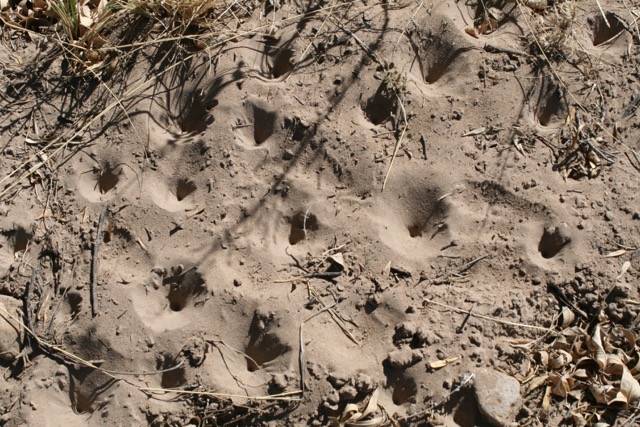
Here are some photos I took out along the ‘Ol Guajolote of the cones made in the sand by antlions, an antlion in my...