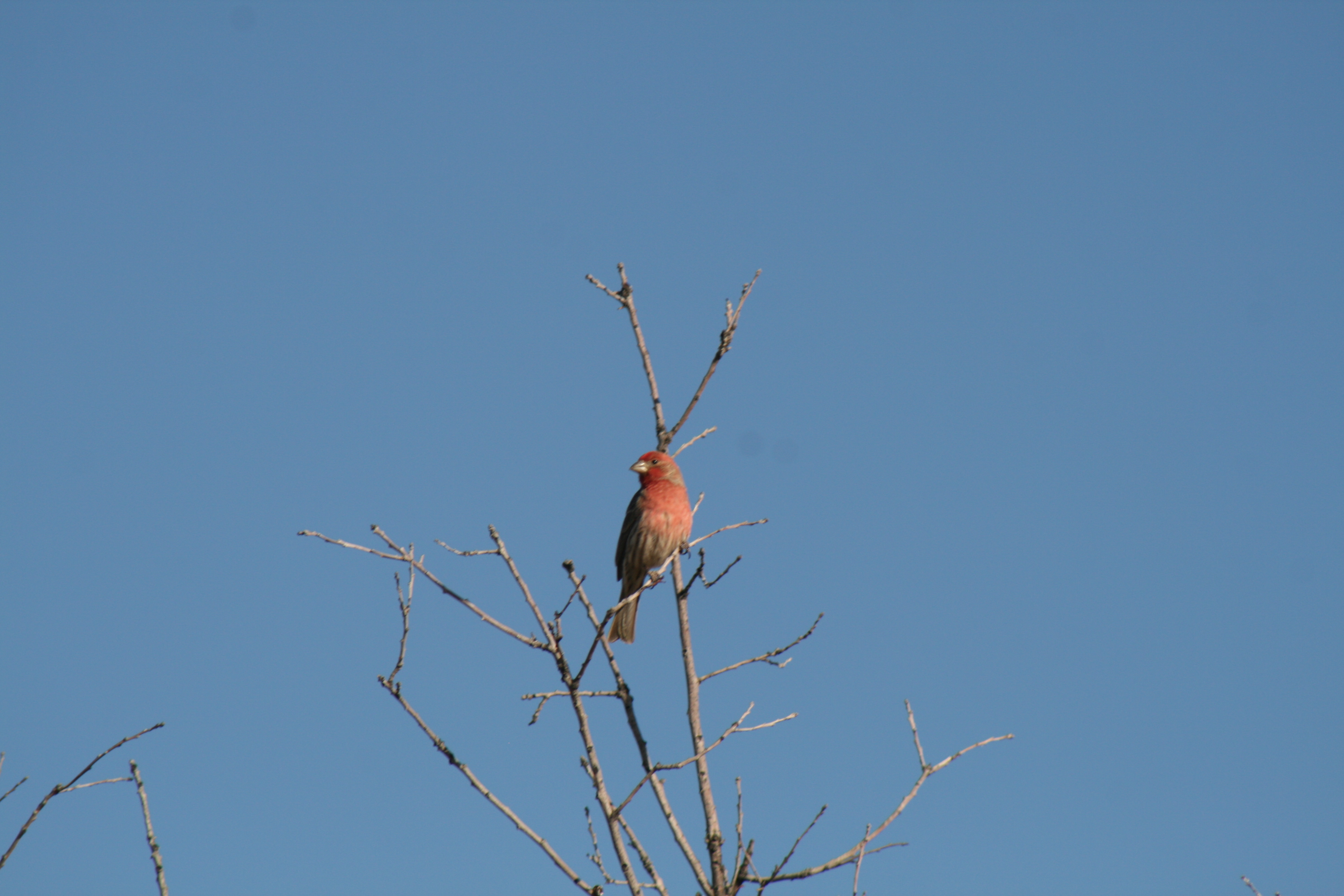
House finches are pretty darned cute and that’s why pet stores back in New York City in 1939 were selling them as “Hollywood Finches”. The Migratory Bird Treaty Act of 1918 was used to prosecute sellers and subsequently some house finches released and then…well, since 1940 we have a western species living quite successfully in the eastern half of the US. Humans never cease to amaze, but oh well, we have them wild and wonderful around you and me. Sometimes, by the way, you will see a male that has yellow markings instead of red. When I first saw that at our feeder I was sure I had a “new bird”, but nope, just a yellow variant.
I love wolfberry plants. I once wrote a song about Lycium fremontii that I saw and identified in the neighborhoods around A Mountain in Tucson. Now that’s love. There are 10 or 11 species of wolfberrys found in Arizona, and shoot, there around 100 species of Lycium found around the world. HELLOOO… goji berries are a wolfberry. Pale wolfberry, Lycium pallidum is found all over the state from 3,500’ to 7,000’ in elevation. Oh, the berry is quite large and not bad tasting either, but like I said, you’ll need to beat the house finches to them.
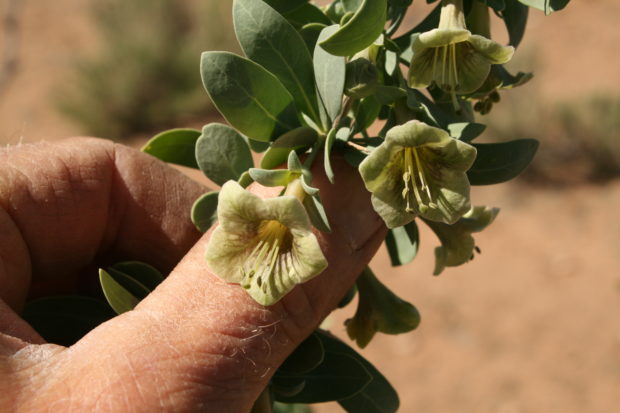
The photos are mine. First of a male house finch perched high in a tree…something they seem to like to do..and then a close up of my fingers and some pale wolfberry leaves and flowers.

When I was a boy vultures were called buzzards. It’s an interesting common name that came across the ocean with early British colonists who...
The glossary in the back of a flora is full of wonderful words that you may never had heard or seen before, especially if...
Bristlehead (Carphochaete bigelovii) is a small shrub…a subshrub…that I’m not sure I would have recognized without the flowers and bristles. I wonder if I’ve...