The little rant at the beginning of this show was spontaneous and was prompted by the trial of Scott Warren, a fellow who was being prosecuted for aiding migrants crossing the desert…aiding means water, food, shelter. We will live in a sad world indeed if we prosecute folks for being kind and preventing death in the desert. http://forms.nomoredeaths.org/about-no-more-deaths/
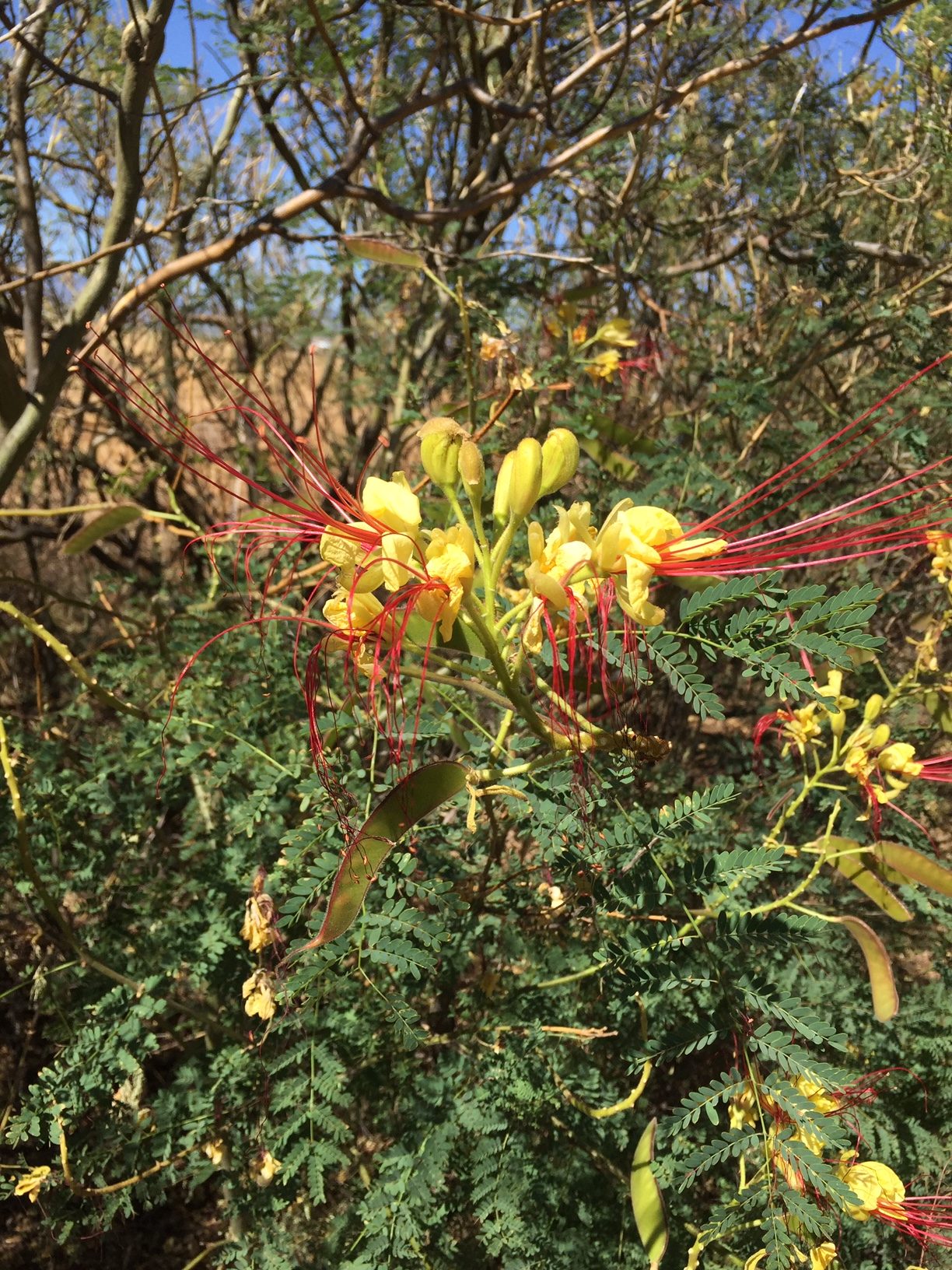
So the flowers of the yellow bird of paradise (Caesalpinia gillesii) are spectacular, but doggone it, the plant is a varmint and around us in Cochise County it is naturalized. There are places near our home where it is thick and a few have popped up on our property. I cut back all the flowering heads and try to find time to dig the plants out. I don’t want them setting fruit and then have the seed being flung from the dehiscing pods, though I do admit that the flinging of seeds is a pretty nifty way to move seed. Red birds of paradise (Caesalpinia pulcherrima) have the same strategy and if you have one close to your house it’s not unusual to hear seed hitting a window.
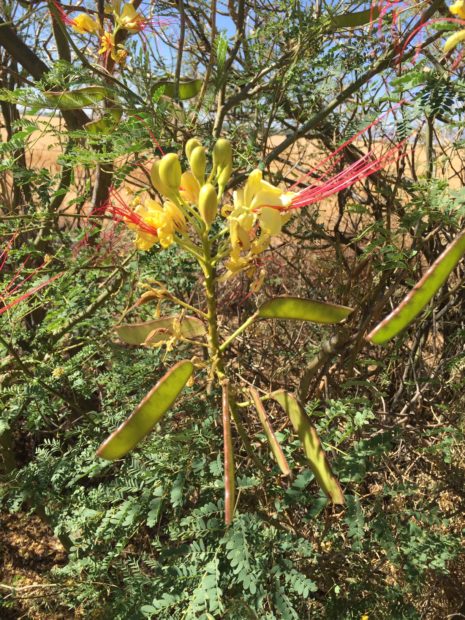
I like the other species of Caesalpinia one finds in local nurseries, C. pulcherrima (I love the red bird of paradise!), C. mexicana and C. cacalaco. These species do great in the hot low desert (as does C. gillesii darn it), and actually I’m starting to see the red bird of paradise do quite well in the uplands. Oh dear…don’t tell me.
The photos are mine and there is no getting around it, the flowers are amazing. Maybe some plant breeder should come up with a sterile selection of Caesalpinia gillesii and then I wouldn’t be so grumpy.
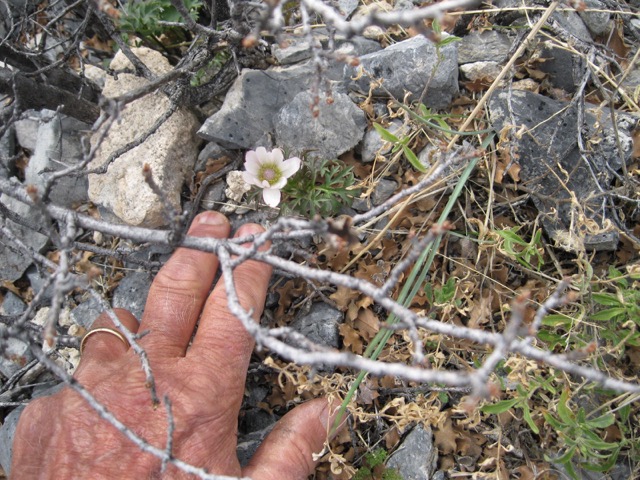
Desert anemone (Anemone tuberosa) is in the Buttercup Family. Buttercups are the genus Ranuculus and the family name is Ranunculaceae. It’s probably just me,...

When I sat down to put this episode together I thought it was going to be about the flatheaded wood borers I find when...
I’m pretty sure I first encountered the plant called mala mujer in the Santa Rita Mountains south of Tucson over 30 years ago. And...