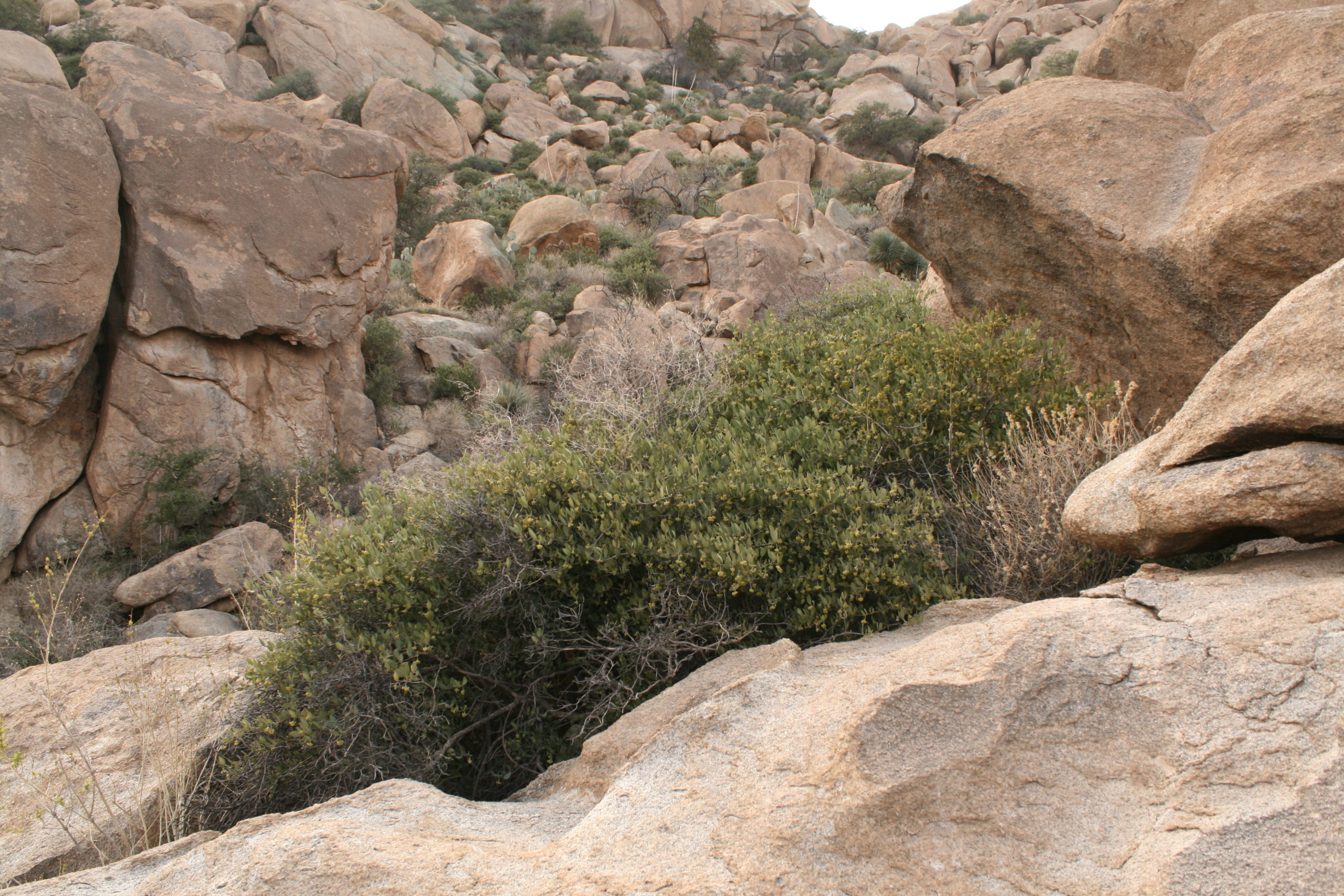
Simmondsia chinensisis is now in its own family, Simmondsiaceae, and not in the boxwood family, Buxaceae. Yay!
The foliage and stems of jojoba are browsed by wildlife and domestic critters. The nuts are eaten as well, explaining other common names like goat-nut, pig-nut and deer-nut. Yes the nuts are edible for humans too, but just a few at a time please, as too many will act as a laxative. That’s not hard to understand considering the liquid wax found in the seed. Jojoba is an important commercial plant because of that liquid wax, but don’t forget it is also a beautiful wild evergreen shrub. Even Arizona Flora says “it is a rather handsome shrub.” That’s the truth!
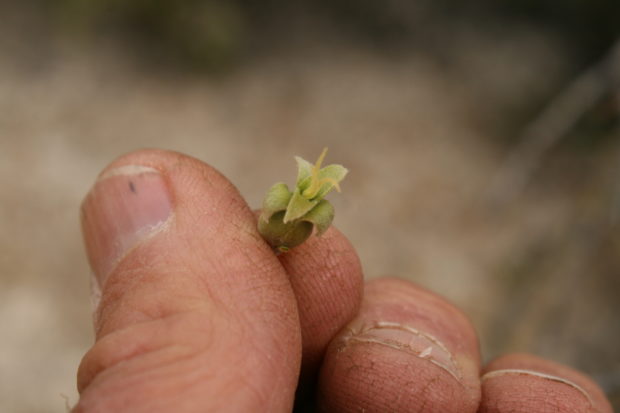
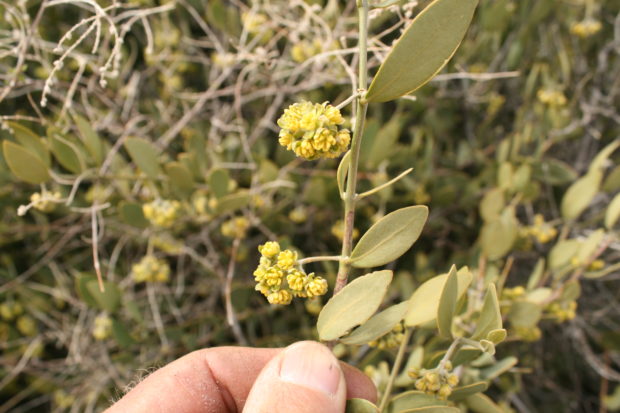
Anyway, I do love the story of how jojoba’s Latinized name came about and I’m glad I got to tell it. The photos are mine and taken in the Dos Cabezas Mountains. Jojoba is dioecious, so male and female flowers are found on separate plants and I thought you’d like to see the male and female flowers.
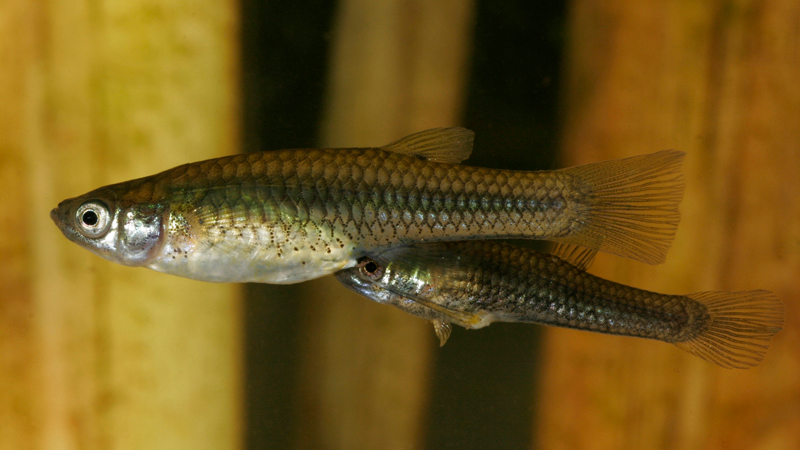
I have had the Gila topminnow going around in my brain for months and this poem may be a work in progress, but I...
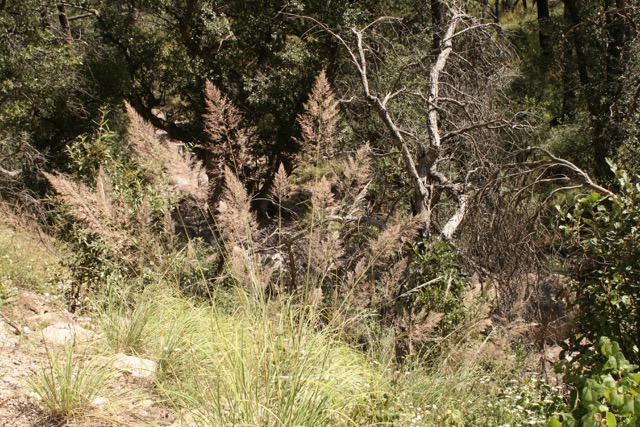
Petey wanders into the nearby hills and comes across a couple different species of native bunch grasses and tells us all about them.
I pursued the Mexican stoneroller ( Campostoma ornatum) for a few minutes trying to get a photo or two before deciding to quit harassing...